Are Stuffed Grape Leaves Healthy?
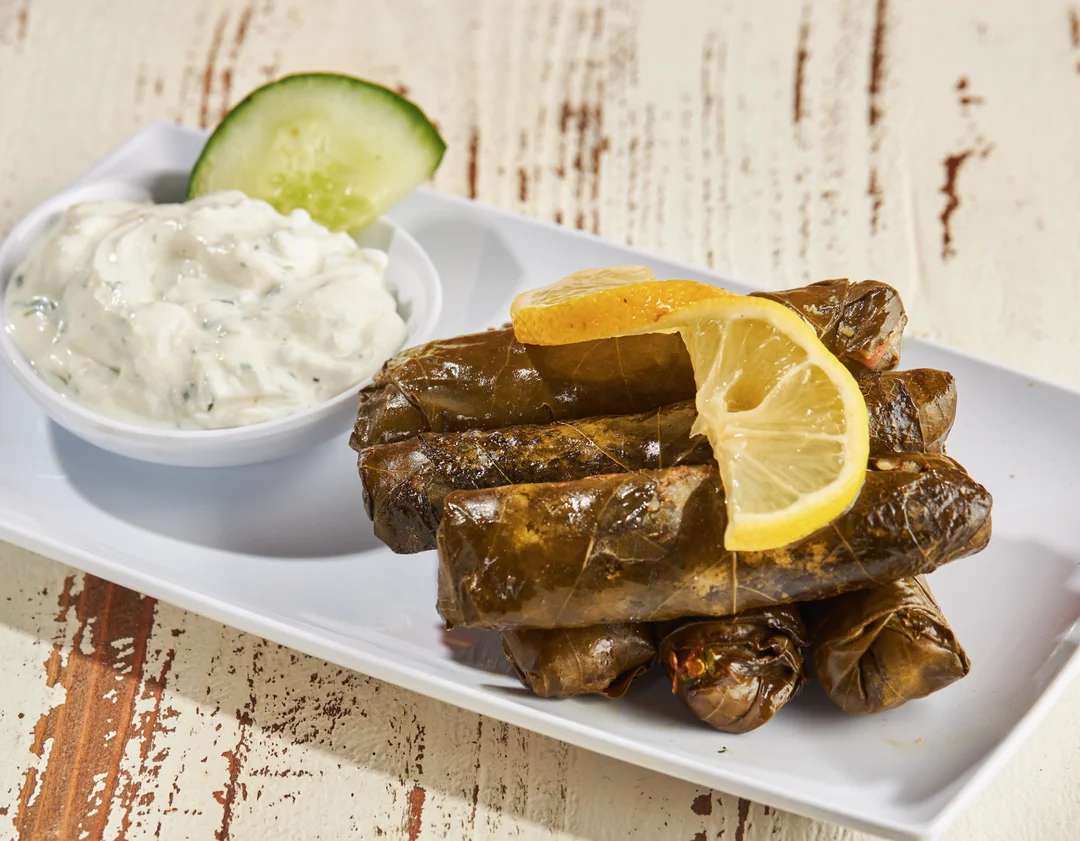
Yes, stuffed grape leaves are a healthy choice for most people. The leaves are rich in fiber and antioxidants. The rice filling provides steady energy. Olive oil adds healthy fat. The classic rice-and-herb version is also vegan and gluten-free. By carefully watching salt, oil, and portion size, you can make this delicious dish even healthier. This is especially true for meat-filled versions, which are higher in calories.
What Are Stuffed Grape Leaves (Dolmadakia)?
Dolmadakia are Greek stuffed grape leaves. The name means "little dolmades." Cooks wrap tender vine leaves around a filling. After that, they simmer the rolls in olive oil and water until soft.
The classic filling is simple. It uses rice, dill, mint, and spring onions. Cretan cooks also add fennel fronds and a little tomato. Each roll is shaped like a small cigar and is about two inches long.
Greeks serve dolmadakia at room temperature or chilled. A squeeze of lemon and a spoon of yogurt sauce finish the plate. Almost every meze table has dolmadakia.
Dolmadakia vs. Dolmades
Both names describe stuffed grape leaves. The difference is size and filling.
Feature Dolmadakia Dolmades
Size Small Larger
Filling Rice and herbs, no meat Ground meat, rice, and herbs
Served Room temperature or chilled Warm
Common sauce Yogurt and lemon Avgolemono (egg-lemon sauce)
Dolmadakia is also called gialantzi. That word comes from a Turkish term meaning "fake” and points to the missing meat. Greek cooks often make this meatless version during Orthodox fasting periods.
The word dolma itself is Turkish. It comes from dolmak, which means "to fill."
The History and Cultural Roots of Stuffed Grape Leaves
Nobody can name the exact inventor of this dish, but many cultures claim it. Each claim is backed by a small piece of the story.
Ancient Leaf-Wrapped Foods
Wrapping food in leaves is very old. Ancient Greeks made a dish called thrion. It used fig leaves around a filling. The playwright Aristophanes mentioned it in 425 BCE. Around 350 BCE, the writer Archestratus suggested wrapping fish in fig leaves with herbs.
Grapevines have grown across the Middle East for thousands of years. That gave cooks plenty of leaves. Many historians point to Persia as a key influence. Still, no ancient Persian text proves it.
From Medieval Kitchens to the Ottoman Empire
Medieval Arab cookbooks list many stuffed vegetables. Grape leaves appear in records a bit later. By the 13th to 15th centuries, the Levant knew a leaf dish called yabraq. Persian cooks used the word dolmeh by the 17th century. Rice joined Persian recipes later, during the Qajar era.
The Ottoman Empire then spread the dish across three continents. Stories say palace cooks in Istanbul first made dolma for the sultan. In time, every social class enjoyed it. Ottoman cooks also began stuffing peppers and tomatoes once those New World vegetables arrived.
Many regions kept their older names. Arabic speakers say warak enab, which means "grape leaves." Turks also say sarma, which means "wrap."
Who Really Invented It?
Four groups make the strongest claims:
- Greeks: One legend ties the dish to Alexander the Great's siege of Thebes in 335 BCE. Historians call it folklore.
- Persians: Many food writers credit Persia's love of rice, herbs, and sweet-sour flavors.
- Armenians: Some scholars argue dolma began as Armenian tolma. The Oxford Companion to Food leans this way.
- Turks: The word dolma is Turkish. The Ottomans spread and named the dish.
Most food historians see a dish shared by many cultures. Each region added its own spices, sauces, and fillings.
How the Dish Traveled
Trade routes and migration carried dolma far from home. Armenian merchants brought stuffed vegetables to Bengal. That inspired a Bengali dish called potoler dorma. Sephardic Jews adopted dolma after settling in Ottoman lands. In 1715, King Charles XII of Sweden returned from exile in Ottoman territory. Cooks followed, and Swedish cabbage dolma was born.
Today, you can find stuffed leaves from the Balkans to Iran.
Are Stuffed Grape Leaves Healthy to Eat?
In most cases, yes. They act as a light yet satisfying appetizer. Here is why they earn that praise.
What the Leaves Bring
Grape leaves are rich in antioxidants. Research points to chlorophyll, carotenoids, quercetin, and resveratrol. The leaves also supply iron, zinc, and fiber. They add small amounts of vitamin A and calcium too. All of this comes with very few calories.
What the Filling Brings
The classic filling uses rice, onion, herbs, lemon, and olive oil. Rice gives steady energy. Dill, mint, and parsley add flavor without extra salt. Lemon adds brightness. Olive oil adds heart-friendly monounsaturated fat. Fiber from the leaves and herbs helps slow digestion.
Built-In Benefits
- Plant-based: The classic version has no meat or dairy.
- Gluten-free: The filling contains no wheat.
- Low in sugar: About 2 grams per five pieces.
- Mediterranean-friendly: They fit a heart-healthy eating pattern.
Watch-Outs
- Salt: Jarred leaves sit in brine. Store-bought dolmades can have 600 to 800 mg of sodium per serving. Homemade versions have around 200 to 300 mg. Rinse jarred ones to cut sodium by about 30 to 40 percent.
- Oil: Cooks use plenty of olive oil to keep rolls moist. It is a healthy fat, but dense in calories. There can be close to 30 grams of fat in six rolls.
- Rice: White rice raises blood sugar at a moderate pace. Pair the rolls with protein.
- Low protein: Rice versions offer only about 4 grams of protein per five pieces.
How Many Calories in Grape Leaves Stuffed With Rice?
Calories depend on roll size and the amount of oil. Here’s a general breakdown.
Roll type Calories per roll Calories for 5 rolls
Small, light on oil About 30 About 150
Medium, standard recipe About 35 to 40 About 175 to 200
Large, generous with olive oil About 80 About 400
Per 100 grams, rice-stuffed grape leaves have about 130 calories. Meat versions contain more calories, as the next table shows.
For medium rolls, a starter of three to four pieces lands near 105 to 160 calories. Five to six pieces come to roughly 175 to 240 calories. Small rolls fall below those ranges. Large, oily rolls can double them.
Pair the rolls with the right dishes to help maintain healthy blood sugar levels. Tzatziki, feta, grilled fish, or a Greek salad can slow the sugar spike. That also keeps you full longer.
Vegetarian vs. Meat-Filled Dolmades
The filling changes the nutrition. Here is how the two styles compare per five pieces.
Feature Rice and herbs Rice and beef or lamb
Calories About 180 About 220 to 250
Protein About 4 g About 8 to 10 g
Fiber About 3 g Varies by recipe
Best for Weight loss and plant-based diets Higher protein needs
Smart Portions
Portion size makes the biggest difference.
- Weight loss: Stick to three or four pieces per meal. Add a salad for volume.
- Blood sugar control: Keep to three or four pieces. Pair them with protein and vegetables.
- General health: Five or six pieces work as part of a full meal.
- Upper limit: More than eight to ten pieces a day can mean too much salt, especially with jarred versions.
How Sufrat Grill’s Stuffed Grape Leaves Dishes Fit Into a Healthy Diet
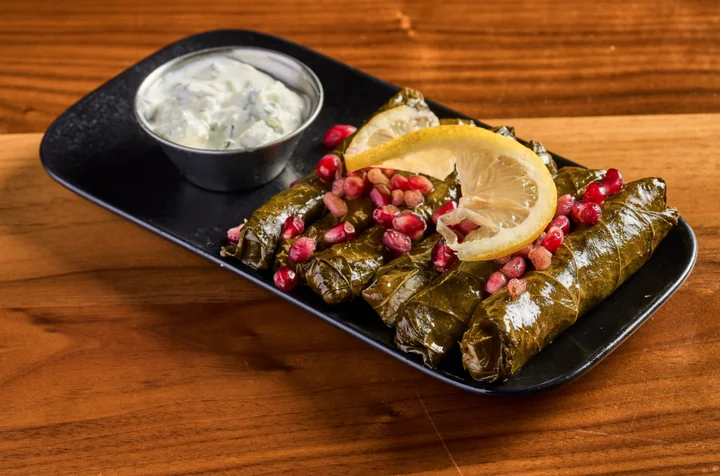
Sufrat serves two versions of this Mediterranean classic. Each plate costs $9 and comes with cool, creamy tzatziki. Both are homemade and can easily fit into a balanced meal.
Grape Leaves Veggie
Sufrat's Grape Leaves Veggie is homemade and hand-rolled. Tender grape leaves wrap a filling of rice, herbs, and vegetables. Each roll is plump, glossy, and full of fresh flavor. A squeeze of lemon adds a bright finish. A side of herbed tzatziki, topped with crisp cucumber, adds a cool, creamy contrast.
This is one of the most wholesome plates on the table:
- Plant-based filling: Rice, herbs, and vegetables make up the heart of every roll.
- Fiber and antioxidants: Grape leaves, vegetables, and herbs all contribute.
- Light, fresh flavor: Lemon and herbs keep every bite lively.
- Olive oil only: Every roll is cooked in olive oil, a Mediterranean staple.
- Cooling tzatziki: Yogurt, cucumber, and garlic add a little protein and a fresh finish.
Olive oil keeps each roll tender and moist. It is a heart-friendly fat, rich in monounsaturated fats. It also makes the plate satisfying, so a few rolls go a long way.
Grape Leaves Meat
Sufrat's Grape Leaves Meat is a hearty Mediterranean classic. Grape leaves wrap seasoned rice and tender beef. A lemon slice and bright pomegranate seeds finish the plate. Tzatziki waits on the side for dipping.
This version brings extra staying power:
- More protein: Beef boosts the protein in every roll.
- Iron and B vitamins: Beef is a natural source of both.
- Olive oil only: These rolls are cooked in olive oil too.
- Balanced bites: Rice, herbs, and beef bring carbs, protein, and flavor together.
It suits anyone who wants a satisfying small plate with more protein. A few rolls with a fresh salad make a complete, balanced lunch.
Estimated Calories and Nutrition
Here is a general estimate for one plate. It assumes six to eight plump rolls. It also assumes a small cup of tzatziki, around two to three ounces.
Grape Leaves Veggie Grape Leaves Meat
Rolls (6 to 8) 300 to 520 calories 390 to 680 calories
Tzatziki 60 to 100 calories 60 to 100 calories
Likely total (about 7 rolls) About 400 to 550 About 500 to 700
Protein 8 to 12 g 15 to 22 g
Carbs 40 to 55 g 40 to 55 g
Fat 20 to 30 g 25 to 35 g
These are rough estimates. Roll size and portion can change them. A good part of the fat comes from olive oil. It is the heart-friendly fat at the center of the Mediterranean diet. Fiber, herbs, and the rice filling help keep the plate balanced. Guests who track sodium or have allergies can ask the Sufrat team about ingredients.
Which Dish Fits Your Goals?
- Light, plant-forward meal: Choose the veggie plate. Pair it with a fresh salad.
- More protein: Choose the meat plate for extra protein and iron.
- Sharing: Both plates are made for the table. A few rolls each leaves room for more dishes.
- Dairy-free: The tzatziki is yogurt-based. Add a "No Sauce" note to skip it.
- Gluten-conscious: Rice-based fillings make these rolls a natural fit. The team can confirm preparation details.
Build a Balanced Meal Around the Rolls
Sufrat makes it easy to tailor your order. Add a note like "Split Plate," "No Sauce," or "Dressing On Side" when you order. Then add a Greek salad or Mediterranean salad for crunch and volume. A grilled kebab adds extra protein for a full meal.
Order a plate and squeeze on the lemon. Taste why dolmades have been a Mediterranean favorite for centuries.
Roll Into a Lighter Mediterranean Meal
Stuffed grape leaves earn their healthy reputation. They bring fiber, antioxidants, and olive oil in a small, satisfying bite. Keep portions sensible. Watch the salt, and pair the rolls with protein and fresh vegetables.
Ready to try them? Stop by Sufrat Grill and order a plate of Grape Leaves Veggie or Grape Leaves Meat. Add a salad, share with the table, and enjoy a taste of Mediterranean tradition.
Frequently Asked Questions About Stuffed Grape Leaves
1. Are dolmades healthy for weight loss?
Yes, in moderation. Three to four rice-stuffed pieces are modest in calories and add fiber. Watch the oil, since it adds up. Pair the rolls with a salad and protein, like grilled chicken or tzatziki, to stay full.
2. Can diabetics eat grape leaves?
Often yes, in small portions. Three to four pieces carry about 16 grams of carbs. The fiber helps slow digestion. Pair them with protein and non-starchy vegetables. Check blood sugar after eating, and ask your doctor or dietitian for personal advice.
3. Are grape leaves good or bad for you?
For most people, they are good. Grape leaves offer antioxidants, fiber, iron, and minerals. The downsides come from brine and oil. Rinse jarred leaves, choose homemade or lightly salted versions, and keep portions reasonable.
4. Are grape leaves good for your liver?
Some lab and animal studies suggest grape leaf extracts may protect liver cells. But human evidence is limited. Stuffed grape leaves are not a liver treatment. Anyone with liver disease should follow their doctor's advice on diet.


